Thursday, June 29, 2017


Friday, June 09, 2017

Thursday, June 08, 2017
Chichester Festival 4th July

#Worthingflash
A
feast of flash fiction and short stories from writers in Worthing.
4th
July
5.30
pm to 7.00 pm
The
New Park Community and Arts Association
New
Park Road
Chichester
PO19
7XY
Derek
McMillan
Patricia
Feinberg Stoner
Rosemary
Noble
Admission
£1 from

Wednesday, June 07, 2017
Beccy Cooper on Education
The NUT does not support a political party so I remind you that other parties are available!
Saturday, June 03, 2017
Question Time Special
I thought the most telling point in the Question Time special was
made by a member of the audience, "Why is everyone here so keen on
killing millions of people?" Jeremy Corbyn is pilloried by the
right-wing press but I would prefer a PM who would think before pressing
the button.
May wouldn't think twice. BoJo wouldn't think once!
On the cap on social care costs, May preferred to keep it vague and make jokes about a "magic money tree." There is one of course, it is used for MP's expenses.
 There is a cash tree you see!
And again she repeated the downright lie "we are spending more on education" when per pupil they are not spending more on education and that is why cuts are inevitable if this shower are re-elected.
It was good of May to stand in for Rudd but is she as good as the original?
May wouldn't think twice. BoJo wouldn't think once!
On the cap on social care costs, May preferred to keep it vague and make jokes about a "magic money tree." There is one of course, it is used for MP's expenses.

And again she repeated the downright lie "we are spending more on education" when per pupil they are not spending more on education and that is why cuts are inevitable if this shower are re-elected.
It was good of May to stand in for Rudd but is she as good as the original?
Thursday, May 25, 2017
Tories smug and complacent over school funding

Dr Becky Cooper for Labour opposed the cuts to school funding and proposed better funding for all schools. It was unacceptable that heads could not afford to fund schools. There was plenty of money for the grammar school project. She advertised the Save our Schools campaign
Hazel Thorpe for the Lib Dems also opposed the cuts although the audience would remember that the Liberal Democrats were the lickspittles of the Tory Party in the coalition.
Leslie Graves for the Greens (actually the Worthing East candidate) emphasised the impact of the cuts on children with special needs. She opposed Academies whether Labour or Tory academies.
Even Mark Withers for UKIP opposed the present cuts but he did not have any facts at his disposal and he made no friends with his support for grammar schools.
Bottomley thought the funding formula should be looked at but saw the issue as one of fair funding for Sussex at the expense of other areas such as London.
If the Tories get their throats cut at this election (metaphorically of course) it will be this smug complacency which is to blame.

Thursday, May 18, 2017
Author page activated
Amazon tell me that "amazon.com/author/derekmcmillan should be live shortly (30 min or less)"
It has a bibliography and a biography and of course that photo!

The old less-friendly URL works https://www.amazon.com/-/e/B009FUXHWY
It has a bibliography and a biography and of course that photo!

The old less-friendly URL works https://www.amazon.com/-/e/B009FUXHWY
Cheap hanging?
Advances in detection are welcome but they are no guarantee against false confessions or planted evidence.
If the case of Ian Brady (cited by Mr Readman) caused this country to go back to the dark ages, Brady might regard that as a suitable epitaph.
Friday, March 24, 2017

Wednesday, March 15, 2017
Conservative Complacency
The leaflet from Councillor Atkins distributed in Durrington shows astonishing complacency. Anyone who has to travel on West Sussex roads will not
accept that they are in fine form and I hope they take advantage of
Councillor Atkins' request to report a pothole. It would be easier to
report those roads which do not have potholes.
And isn't it a little disingenuous for Atkins to support the "empty plate cafe" when food banks are a consequence of Tory cuts?
And isn't it a little disingenuous for Atkins to support the "empty plate cafe" when food banks are a consequence of Tory cuts?
Sunday, March 12, 2017
Socialists and the Early Church
The seeds of the Catholic Church were planted in Palestine. They managed to grow despite ferocious persecution and even gained the respect of their persecutors.
Acts2:42-47 gives a description of the early Christian community which could be fairly described as socialist. All goods were held in common and property was sold to help the poor. Selfishness was not allowed. Although they were subject to persecution they still saw themselves as a part of the community and were daily attracting more followers from that community (Acts2:47). In the nature of things, prior to the evangelism of St Paul, the first Christians mainly came from the Jewish tradition.
While the early Church was able to recruit from the community, the rich and powerful regarded them as a threat. Jesus advised his apostles that it was as hard for a rich man to enter the Kingdom as it was for a camel to pass the eye of a needle. (Mark 10:25). He emphasised that those who would be great must act as humble servants (Mark 10:43-45). This was a concept rightly feared by those in power – it meant turning the world upside-down.
Moreover, He did not just put these dangerous ideas in words. An example of this is the narrative which appears in all four Gospels ( Mark 11:15–19, Matthew 21:12–17, Luke 19:45–48, John 2:13–16). Jesus casts out the profiteers from the temple which he refers to as “My father's house” (John 2:16). The Chief Priests wanted to kill him but thought him too popular (Luke 19:48).
We live in a world in which Christians are still persecuted for their beliefs – for example by ISIL in Iraq. Nevertheless for the most part to be a follower of Christ in a civilised country does not carry the same high probability of martyrdom as it did for the early Church.
There was initially a continued failure to understand Christ on the part of the apostles. They did not see beyond “restoring the Kingdom of Israel” as the goal of Christians. Jesus, on the contrary, told them they would have to take the message to “the ends of the earth” (Acts 1:8). By definition, that would involve turning to the Gentiles as well as the Jews.
Acts 1:26 refers to a practice of the early Church which seems very strange to 21st century Christians. There were two nominees to take the place of Judas. Peter did not assert his authority to give a casting vote but the apostles drew lots and the lot fell to Mathias. It was stressed that both nominees had a long history with the apostles (Acts 1:21).
Peter does assert his authority on the day of Pentecost. He appeals first to the devout Jews by quoting David's revelation concerning the Messiah. (Acts 2:25-28) and he addresses them as 'fellow Israelites' (Acts 2:29). However, he is already talking of the wider mission of the Church when he talks about spreading the Good News around the world.(Acts 2: 39)
Moreover, the next incident recorded was Peter's healing of a lame beggar (Acts 3: 1-10). At this stage, Peter is beginning to look very like the rock on which the Church will be built rather than the vacillating doubter portrayed in Luke 22:54-62. Under Peter's leadership, it is likely that the Church was more self-confident than before. After all, 3000 people had been baptised and he had demonstrated his power to heal the sick.
Peter's appeal to the witnesses is couched in terms of Old Testament prophecy (Acts 3: 24-26) which would appeal to an audience of devout Jews. Although Peter holds them collectively responsible for the Crucifixion, their sins can be washed away through Christ.
The name of Ananias was to become a byword for dishonesty. The story of Ananias and his wife Sapphira is a fair indication of the attitude of the Church towards selfishness. When questioned by Peter both of them lied (Acts 5:1-11) and both of them died. They had a free choice as to whether to give the price of the land which they had sold to the Church (Acts 5:4) but their attempt to have it both ways by lying about the price was construed as lying to the Holy Spirit, lying to God.
The same point was made in a backhanded way by the Pharisee called Gamaliel who asserted that if the Church was indeed a man-made institution then it would crumble of its own accord but that if the Sanhedrin opposed the Church and Jesus Christ was the son of God then the Sanhedrin would be in conflict with God. (Acts 5:34-39)
The appointment of the seven men of good reputation to oversee the welfare of widows in the Church was an indication of the increasing emphasis on integrating the Hellenists and Hebrews (Acts 6:1-6).
The martyrdom of St Stephen would have been both a shock and an inspiration to the Church. His accusers from the Synagogue of Freedmen were bearing false witness in violation of the Law despite claiming to adhere to it. Stephen's martyrdom would have brought home to every member of the Church how great was the danger they faced. Their opponents were capable of abandoning their own Law in order to strike blows against the Church. On the other hand, St Stephen's faith and courage in adversity and the way he forgave his enemies (Acts 7:60) would have been a shining example to them.
The subsequent persecution of Christians by Saul proved to be counterproductive. (Acts 8:4) The Christian community was scattered but wherever they went they spread the Good News. Evil is unavailing. A bad deed such as the persecution of Christians could lead to a good consequence, the spreading of the Gospel.
Christians have often been mocked for blessing those who persecuted them (Luke 6:18). Foremost among the mockers was Nietzsche (Genealogy of Morals, p17). However, the sacrifice of the first martyr, Saint Stephen, and the subsequent persecution of the Christians suggests that those who persecuted the Christians were a blessing in disguise. Indeed the witness of the martyrs strengthened the Church rather than weakening it.
Joseph A Fitzmyer (Contemporary Catholic Theology p165-167) pointed out that Saul probably had the name Paul from birth. He is more often referred to by his Gentile name, Paul, after he began his mission to the Gentiles but he was “set aside” from birth for the mission he eventually undertook. (Gal 1.15).
Over a period of time, Gentiles joining the Church were no longer expected to comply with the strictures of Judaism. The dietary rules were relaxed on the basis that a Christian could not call unclean that which God had made clean (Acts 10:15); Gentiles did not need to be circumcised (the sign of the old covenant) (Acts 10:45). The 613 Laws listed by the scribes (http://www.hebrew4christians.com/Articles/Taryag/taryag.html) were simplified to the two commandments given by Jesus (Luke 10:27).
On this basis, St Paul was able to take the good news to the Gentiles. The gospels do not have a surprise ending. The death and resurrection of Jesus Christ were the foundations on which they were built. The early Church believed the second coming of the Lord was imminent. By the time St Luke came to write the Acts of the Apostles this was clearly not the case. Nevertheless, the death on the cross and the resurrection of the Messiah and the Holy Spirit's constant presence and guidance enabled the early church to grow and to become a catholic Church.
Acts2:42-47 gives a description of the early Christian community which could be fairly described as socialist. All goods were held in common and property was sold to help the poor. Selfishness was not allowed. Although they were subject to persecution they still saw themselves as a part of the community and were daily attracting more followers from that community (Acts2:47). In the nature of things, prior to the evangelism of St Paul, the first Christians mainly came from the Jewish tradition.
While the early Church was able to recruit from the community, the rich and powerful regarded them as a threat. Jesus advised his apostles that it was as hard for a rich man to enter the Kingdom as it was for a camel to pass the eye of a needle. (Mark 10:25). He emphasised that those who would be great must act as humble servants (Mark 10:43-45). This was a concept rightly feared by those in power – it meant turning the world upside-down.
Moreover, He did not just put these dangerous ideas in words. An example of this is the narrative which appears in all four Gospels ( Mark 11:15–19, Matthew 21:12–17, Luke 19:45–48, John 2:13–16). Jesus casts out the profiteers from the temple which he refers to as “My father's house” (John 2:16). The Chief Priests wanted to kill him but thought him too popular (Luke 19:48).
We live in a world in which Christians are still persecuted for their beliefs – for example by ISIL in Iraq. Nevertheless for the most part to be a follower of Christ in a civilised country does not carry the same high probability of martyrdom as it did for the early Church.
There was initially a continued failure to understand Christ on the part of the apostles. They did not see beyond “restoring the Kingdom of Israel” as the goal of Christians. Jesus, on the contrary, told them they would have to take the message to “the ends of the earth” (Acts 1:8). By definition, that would involve turning to the Gentiles as well as the Jews.
Acts 1:26 refers to a practice of the early Church which seems very strange to 21st century Christians. There were two nominees to take the place of Judas. Peter did not assert his authority to give a casting vote but the apostles drew lots and the lot fell to Mathias. It was stressed that both nominees had a long history with the apostles (Acts 1:21).
Peter does assert his authority on the day of Pentecost. He appeals first to the devout Jews by quoting David's revelation concerning the Messiah. (Acts 2:25-28) and he addresses them as 'fellow Israelites' (Acts 2:29). However, he is already talking of the wider mission of the Church when he talks about spreading the Good News around the world.(Acts 2: 39)
Moreover, the next incident recorded was Peter's healing of a lame beggar (Acts 3: 1-10). At this stage, Peter is beginning to look very like the rock on which the Church will be built rather than the vacillating doubter portrayed in Luke 22:54-62. Under Peter's leadership, it is likely that the Church was more self-confident than before. After all, 3000 people had been baptised and he had demonstrated his power to heal the sick.
Peter's appeal to the witnesses is couched in terms of Old Testament prophecy (Acts 3: 24-26) which would appeal to an audience of devout Jews. Although Peter holds them collectively responsible for the Crucifixion, their sins can be washed away through Christ.
The name of Ananias was to become a byword for dishonesty. The story of Ananias and his wife Sapphira is a fair indication of the attitude of the Church towards selfishness. When questioned by Peter both of them lied (Acts 5:1-11) and both of them died. They had a free choice as to whether to give the price of the land which they had sold to the Church (Acts 5:4) but their attempt to have it both ways by lying about the price was construed as lying to the Holy Spirit, lying to God.
The same point was made in a backhanded way by the Pharisee called Gamaliel who asserted that if the Church was indeed a man-made institution then it would crumble of its own accord but that if the Sanhedrin opposed the Church and Jesus Christ was the son of God then the Sanhedrin would be in conflict with God. (Acts 5:34-39)
The appointment of the seven men of good reputation to oversee the welfare of widows in the Church was an indication of the increasing emphasis on integrating the Hellenists and Hebrews (Acts 6:1-6).
The martyrdom of St Stephen would have been both a shock and an inspiration to the Church. His accusers from the Synagogue of Freedmen were bearing false witness in violation of the Law despite claiming to adhere to it. Stephen's martyrdom would have brought home to every member of the Church how great was the danger they faced. Their opponents were capable of abandoning their own Law in order to strike blows against the Church. On the other hand, St Stephen's faith and courage in adversity and the way he forgave his enemies (Acts 7:60) would have been a shining example to them.
The subsequent persecution of Christians by Saul proved to be counterproductive. (Acts 8:4) The Christian community was scattered but wherever they went they spread the Good News. Evil is unavailing. A bad deed such as the persecution of Christians could lead to a good consequence, the spreading of the Gospel.
Christians have often been mocked for blessing those who persecuted them (Luke 6:18). Foremost among the mockers was Nietzsche (Genealogy of Morals, p17). However, the sacrifice of the first martyr, Saint Stephen, and the subsequent persecution of the Christians suggests that those who persecuted the Christians were a blessing in disguise. Indeed the witness of the martyrs strengthened the Church rather than weakening it.
Joseph A Fitzmyer (Contemporary Catholic Theology p165-167) pointed out that Saul probably had the name Paul from birth. He is more often referred to by his Gentile name, Paul, after he began his mission to the Gentiles but he was “set aside” from birth for the mission he eventually undertook. (Gal 1.15).
Over a period of time, Gentiles joining the Church were no longer expected to comply with the strictures of Judaism. The dietary rules were relaxed on the basis that a Christian could not call unclean that which God had made clean (Acts 10:15); Gentiles did not need to be circumcised (the sign of the old covenant) (Acts 10:45). The 613 Laws listed by the scribes (http://www.hebrew4christians.com/Articles/Taryag/taryag.html) were simplified to the two commandments given by Jesus (Luke 10:27).
On this basis, St Paul was able to take the good news to the Gentiles. The gospels do not have a surprise ending. The death and resurrection of Jesus Christ were the foundations on which they were built. The early Church believed the second coming of the Lord was imminent. By the time St Luke came to write the Acts of the Apostles this was clearly not the case. Nevertheless, the death on the cross and the resurrection of the Messiah and the Holy Spirit's constant presence and guidance enabled the early church to grow and to become a catholic Church.
Tuesday, February 28, 2017
Frank Field attacks pensioners
Frank Field, chair of the Commons Work and Pensions committee has called for the "triple lock" on pensions to be abolished. Under this scheme the government solemnly promised to raise pensions by the same rate as average earnings, the Consumer Price Index or 2.5 percent.
With breathtaking mendacity, Field argued that this would mean raising the pension age to 70.5 by 2060. It would mean no such thing and Field knows this very well.
It would only mean that if there were to be no increase in expenditure on pensions. This would be a measure to save money. Scrapping Trident would save money. but Field is careful not to suggest that. An end to the prestige Grammar School program would save money, indeed stopping MP's expenses would also be a measure to save money and Hell would freeze over before Field would suggest that!
What a disgrace.
With breathtaking mendacity, Field argued that this would mean raising the pension age to 70.5 by 2060. It would mean no such thing and Field knows this very well.
It would only mean that if there were to be no increase in expenditure on pensions. This would be a measure to save money. Scrapping Trident would save money. but Field is careful not to suggest that. An end to the prestige Grammar School program would save money, indeed stopping MP's expenses would also be a measure to save money and Hell would freeze over before Field would suggest that!
What a disgrace.
Thursday, February 09, 2017
Tuesday, February 07, 2017
Domain of Dreams and Carmarthen
Readers may
remember that Space Dog Alfred invaded Carmarthen. Now Domain of Dreams
has done the same thing! It has been purchased by Carmarthen libraries. I think books are expensive and libraries are very important for people who want to read them. Tories close libraries because they fear ideas.

It is a book of short stories. Read one a night and you will have better dreams!

It is a book of short stories. Read one a night and you will have better dreams!
Saturday, January 28, 2017
Chichester Festival update
I had to arrange a venue and ticket price by the end of this month in
order to participate in the Chichester Festival and June and July. The
venue is

The studio
New Park Community & Arts Association
New Park Road
Chichester
PO19 7XY
It can seat 40 and the cost is £15 an hour.
On that basis a ticket price of £1 will easily cover our costs
The time is 5.30 pm to 7 pm
The date is 4 July.

Saturday, January 21, 2017
Chichester Festival
Phil Hewitt (group arts editor for Sussex Newspapers which includes the Worthing Herald) has asked me to speak at the Chichester Festival. At the moment I am seeking to round up a posse - possibly a panel - of Worthing writers to come along and read some of their work. This can be either an extract from a book or a short story.
If you are interested, please email me on derekmcmillan1951@gmail.com
I am proposing to talk about flash fiction and read the audience an example. Depending on the time I might also talk about self-publishing, the way such diverse writers as Stephen King and Virginia Woolf started out on their careers.

If you are interested, please email me on derekmcmillan1951@gmail.com
I am proposing to talk about flash fiction and read the audience an example. Depending on the time I might also talk about self-publishing, the way such diverse writers as Stephen King and Virginia Woolf started out on their careers.

Wednesday, January 18, 2017
Author Central updated biography
I write the kind of stories I enjoy reading, whether they are detective, adventure, science fiction, fantasy or alternative history. Most recently I completed a new #mirrorofeternity book, "Domain of Dreams" which is a collection of short stories. It has something for everybody.
I write about 500 words a day and my wife (who is also my editor) discusses the work with me. This is the part I love most. Writing can be a solitary activity but it need not be.
My favourite type of story is the short story. Mark Twain once apologised for the length of a letter to a friend by saying "I didn't have time to write a short one." I have written short stories for Alfiedog.com and http://www.everydayfiction.com/ as well as "Page and Spine". It is the devil's own job to get short stories published and these sites are a godsend if you will excuse the mixed metaphor :) I like editors who don't just give an "accepted" or "rejected" but tell the writer exactly why they liked or disliked the story. This is really useful.
#mirrorofeternity

I write about 500 words a day and my wife (who is also my editor) discusses the work with me. This is the part I love most. Writing can be a solitary activity but it need not be.
My favourite type of story is the short story. Mark Twain once apologised for the length of a letter to a friend by saying "I didn't have time to write a short one." I have written short stories for Alfiedog.com and http://www.everydayfiction.com/ as well as "Page and Spine". It is the devil's own job to get short stories published and these sites are a godsend if you will excuse the mixed metaphor :) I like editors who don't just give an "accepted" or "rejected" but tell the writer exactly why they liked or disliked the story. This is really useful.
#mirrorofeternity

Thursday, December 29, 2016
Ed Balls Speaking Out for Capitalism
Ed Balls has a conversational style of writing which makes this book
easy to read. However his view that there is nothing wrong with
capitalism will not make him any friends in the Labour movement.
He elicits sympathy for his battle against his stammer. His view that anyone who disagrees with him is a Communist will probably elicit less sympathy. He criticises the Oxford Labour Club for discussing whether to have a hammer and sickle on its banner and complains they rejected his openly pro-capitalist stance.
The book seems to be more significant for its omissions than for its content. It gives some interesting and amusing anecdotes from the point of view of one of Gordon Brown's henchmen but glosses over the role of New Labour in turning the Labour Party from a party promoting peace and public ownership into a party promoting war and privatisation.
The Blairites wanted Labour and Tories to be as different as "left Twix" and "right Twix"..
He talks of his and Brown's "distress" and " "disquiet" over Iraq. He fails to explain why they did damn all to publicly oppose Blair's blood lust and subservience to George W Bush.
In his Education role he developed a useful skill. Every teacher organisation in the country was opposed to SATs and Academies. Balls managed to metaphorically stick chewing gum in his ears every time they spoke to him.
He coined the phrase "Every child matters" except the children of Iraq and Afghanistan who were bombed from a great height. Clearly they did not matter.
Balls' sycophantic grovelling to the royal family is disgusting. He talks about the privilege of meeting the queen (the richest tax dodger in the land). He also expresses his (probably unique) view that Prince Charles' ventures into politics were of any use whatsoever.
 Stick to the dancing, Balls. As Craig Revel Horwood might say, "New Labour was a disaster, dahling."
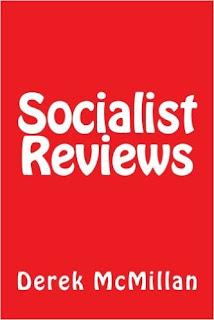
He elicits sympathy for his battle against his stammer. His view that anyone who disagrees with him is a Communist will probably elicit less sympathy. He criticises the Oxford Labour Club for discussing whether to have a hammer and sickle on its banner and complains they rejected his openly pro-capitalist stance.
The book seems to be more significant for its omissions than for its content. It gives some interesting and amusing anecdotes from the point of view of one of Gordon Brown's henchmen but glosses over the role of New Labour in turning the Labour Party from a party promoting peace and public ownership into a party promoting war and privatisation.
The Blairites wanted Labour and Tories to be as different as "left Twix" and "right Twix"..
He talks of his and Brown's "distress" and " "disquiet" over Iraq. He fails to explain why they did damn all to publicly oppose Blair's blood lust and subservience to George W Bush.
In his Education role he developed a useful skill. Every teacher organisation in the country was opposed to SATs and Academies. Balls managed to metaphorically stick chewing gum in his ears every time they spoke to him.
He coined the phrase "Every child matters" except the children of Iraq and Afghanistan who were bombed from a great height. Clearly they did not matter.
Balls' sycophantic grovelling to the royal family is disgusting. He talks about the privilege of meeting the queen (the richest tax dodger in the land). He also expresses his (probably unique) view that Prince Charles' ventures into politics were of any use whatsoever.

Wednesday, December 21, 2016
Rail Safety
I remain to be
convinced that driver-only trains are as safe as those where
there is a guard. There are many case histories of people who
have been helped by rail guards. I think Southern Rail have handled
the dispute very badly and getting passengers to contact the
rail unions to criticise their actions was scraping the bottom
of the barrel. This is particularly so because RMT report that
most passengers who contacted them supported the idea of guards
on trains.
What they are not telling passengers is that the increased risk to passengers of DOO has even been recognised by the Rail Safety Standards Board (RSSB) which is funded by GTR and other Train Operating Companies. RSSB have said
“DOO does not create additional undesired events but may increase the likelihood of an event occurring or increase the severity of its consequence." That is not a ringing endorsement of Driver Only Operation. Yet that is what Southern Rail is incorrectly telling passengers.

What they are not telling passengers is that the increased risk to passengers of DOO has even been recognised by the Rail Safety Standards Board (RSSB) which is funded by GTR and other Train Operating Companies. RSSB have said
“DOO does not create additional undesired events but may increase the likelihood of an event occurring or increase the severity of its consequence." That is not a ringing endorsement of Driver Only Operation. Yet that is what Southern Rail is incorrectly telling passengers.

Subscribe to:
Posts (Atom)